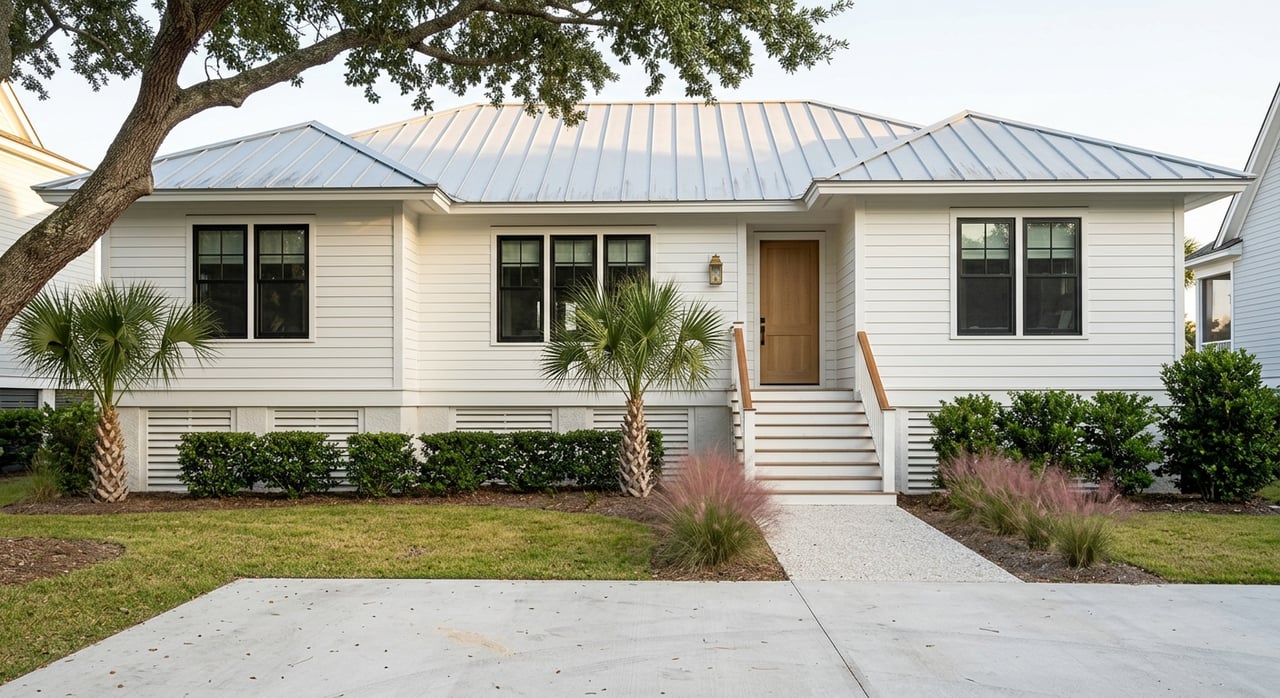
Isle of Palms Home Buying: Beachfront vs Inland
May 28, 2026
May 28, 2026
If you are thinking about buying on Isle of Palms, one question can shape your whole search: do you want to live right on the beach, or would a few streets inland actually fit your life better? Both options can be beautiful, high-value choices, but they come with very different price points, ownership costs, and day-to-day experiences. Understanding those tradeoffs can help you buy with more confidence and fewer surprises. Let’s dive in.
Isle of Palms is firmly in the luxury market, not the entry-level market. Redfin reported a March 2026 median sale price of $1.475 million, with homes averaging about 4% below list price and going pending in around 67 days. Zillow also placed the island’s average home value near $1.62 million and its March 2026 median list price near $2.04 million.
That matters because whether you choose beachfront or inland, you are still buying into a premium coastal market. The real decision is less about whether one option is “cheap” and more about which lifestyle and ownership profile makes the most sense for you.
Beachfront homes offer the most direct version of coastal living. You get immediate access to the sand, open water views, and a front-row seat to one of the island’s biggest lifestyle draws. For many buyers, that convenience and scenery are the whole point of owning here.
The city describes Isle of Palms as having seven miles of beach. Its Front Beach district on Ocean Boulevard from 10th to 14th Avenue includes restaurants, shops, public restrooms, and parking, which adds to the appeal for owners who want easy walkability to beach-centered amenities.
Direct beachfront single-family homes sit at the top of the pricing ladder on the island. One example, 910 Ocean Boulevard, carries a current Redfin estimate of about $6.71 million. Another example, 4001 Palm Boulevard, a second-row home with ocean views and direct beach access across the street, is estimated at about $5.56 million.
If your budget is lower, beachfront access may show up more often in condo form than in a detached house. A condo at 1300 Ocean Boulevard sold recently for $560,000, while a Wild Dunes condo at 5800 Palmetto Drive was listed at $925,000.
The biggest draw is simple: access. You can step outside and be at the beach in moments, and in some locations you may also be near shopping and dining without needing to get in the car.
Beachfront and near-beach properties also tend to attract more attention from buyers looking at second homes or rental use. Listing examples in the market highlight why proximity to the ocean can matter so much for that audience, especially when views and walkability are part of the package.
Beachfront ownership is not just about the view. It also tends to come with more complexity around flood standards, coastal oversight, and maintenance.
The City of Isle of Palms participates in the National Flood Insurance Program and requires new construction and substantial improvements to meet flood-zone standards. In VE zones, plans need architect or engineer stamps and V-zone certification. In AE zones, projects typically need an architect stamp. The city also requires lowest-floor elevations at least one foot above base flood elevation or 13 feet above mean sea level, whichever is higher, along with flood-resistant materials below the design flood elevation.
South Carolina also applies beachfront jurisdiction rules through baseline and setback lines. In beachfront critical areas, work involving habitable structures, pools, decks, landscaping, fencing, renourishment, and service lines can require authorization.
Beach maintenance is also active on Isle of Palms. The city announced a 2026 offshore beach renourishment project that could place up to 2.5 million cubic yards of sand along about 19,200 linear feet of beach as part of its long-term beach management plan.
For condo buyers, HOA dues can be a major part of the monthly picture. In recent examples, 1300 Ocean Boulevard showed $400 per month in HOA dues, while 5800 Palmetto Drive showed $1,511 per month.
Living inland does not mean leaving the island lifestyle behind. You are still on Isle of Palms, still close to the beach, and still buying in a high-end market. What you often gain is a different balance of price, privacy, space, and practical ownership.
Inland homes can still be expensive, especially if they have strong marsh, waterway, or golf-course views. Even so, pricing is often materially lower than true beachfront homes.
Examples in the current market show that inland single-family homes can come in well below the top oceanfront tier. A home at 3600 Hartnett Boulevard is listed at $1.249 million with no HOA dues, while 2602 Waterway Boulevard is estimated at about $1.71 million.
That does not mean inland homes are basic. Waterway-facing and golf-course-facing properties can still command a premium, but that premium is usually tied to land, privacy, or view value rather than direct beach frontage.
For many buyers, inland living offers a more relaxed ownership experience. You may get a larger yard, more garage space, and a little more separation from beach traffic and activity.
That can matter a lot if you plan to use the home as a primary residence, a quieter second home, or a long-term hold. One inland listing on Hartnett Boulevard highlights a three-car garage and landscaped yard, while a Waterway Boulevard home emphasizes marsh, golf-course, and Intracoastal Waterway views.
Going inland can reduce some of the friction that comes with direct beachfront ownership, but it does not remove the reality of owning on a coastal barrier island. Flood-related building standards and insurance considerations still matter, and pricing remains elevated compared with many mainland markets.
You are also making a lifestyle trade. You may not have the instant beach access or panoramic ocean views that make beachfront homes so iconic. If walking out your door straight to the sand is your top priority, inland may feel like a compromise.
Choosing between beachfront and inland living usually comes down to what matters most in your daily life and long-term goals.
| Factor | Beachfront | Inland |
|---|---|---|
| Price | Typically highest on the island | Often lower than direct beachfront |
| Views | Ocean views and direct beach setting | Marsh, waterway, golf-course, or neighborhood views |
| Access | Immediate beach access | Short drive, bike ride, or walk depending on location |
| Ownership complexity | More flood, permitting, and coastal oversight | Often simpler, though still coastal ownership |
| HOA likelihood | Common in beachfront and resort condos | Varies, with some single-family homes showing no HOA |
| Privacy | Can feel more exposed near active beach areas | Often offers more privacy and separation |
| Rental appeal | Often stronger for short-term-rental interest | Can still appeal, but usually less tied to beach premium |
If rental income is part of your decision, location matters, but so do the local rules. Isle of Palms is a regulated short-term-rental market, and you should understand the operating requirements before you buy.
The city requires a short-term rental business license for any residential rental. Typical overnight occupancy is set at two people per bedroom plus two, up to 12 people, and total occupancy is capped at twice the overnight limit or 40 people. The city also requires a 24/7 contact who can be on site within one hour.
There are also taxes and property-use implications to factor in. The city states that rentals of 30 days or less in Isle of Palms and Charleston County are subject to a combined 14% tax structure, and the rental page notes income-based license fees plus a 6% property-tax assessment for rental property that is not the owner’s primary residence.
Beachfront and near-beach homes are often marketed with stronger short-term-rental appeal. One 10th Avenue listing claims more than $200,000 in annual rental income and over $130,000 already secured for 2026, while a 1300 Ocean Boulevard condo claims nearly $40,000 in projected annual rental income. These are listing claims, not independently verified income statements, but they do show why many buyers place a premium on beach proximity.
The right choice is not only about numbers. It is also about how you want your home to feel when you are there.
Beachfront living puts the island’s most visible features at your doorstep. That can feel energizing and special, especially if your goal is to maximize views, walkability, and the classic beach-house experience.
At the same time, beach life comes with rules and activity. The city prohibits vehicles on the beach, overnight storage of beach gear, smoking on the beach and access paths, and commercial business on the beach. Dogs may be off leash only during specific morning and evening windows.
The island also has more than 50 beach access paths. As a result, homes closest to Ocean Boulevard can experience more visitor traffic and parking activity during busier seasons.
Inland living often feels more private and more residential in day-to-day use. You may trade the instant “toes in the sand” experience for a calmer setting and easier routines, while still staying close to everything that makes Isle of Palms desirable.
Beachfront may be the better fit if your top priorities are direct sand access, open ocean views, and stronger appeal for vacation use or rental interest. You may also be comfortable with a higher purchase price and more layered ownership responsibilities.
Inland may be the better fit if you want more privacy, potentially more space, and a simpler day-to-day ownership experience while still enjoying island living. This path often appeals to buyers who want the Isle of Palms lifestyle without paying the top premium for direct frontage.
The best choice usually comes down to how you plan to use the home. A primary residence, second home, and investment-minded purchase can each point you in a different direction.
A smart Isle of Palms search starts with more than the view. It starts with understanding how price, location, rules, and maintenance all work together so you can buy the property that truly supports your goals.
If you want help comparing beachfront and inland homes on Isle of Palms, Ellen O'Neil can help you weigh the numbers, the lifestyle, and the long-term strategy with clear local guidance.
Stay up to date on the latest real estate trends.


Newsletter
Your Monthly Charleston Updates!
Strategic marketing, trusted guidance, and a client-first approach designed to deliver exceptional results.